

Science supports society

Researchers develop knowledge in support of society. This is partly done together with other societal actors.
When looking into roles, it helps to distinguish between two ideal-typical ways in which researchers contribute to societal change and interact with societal actors1. The transitions between the two are fluid.
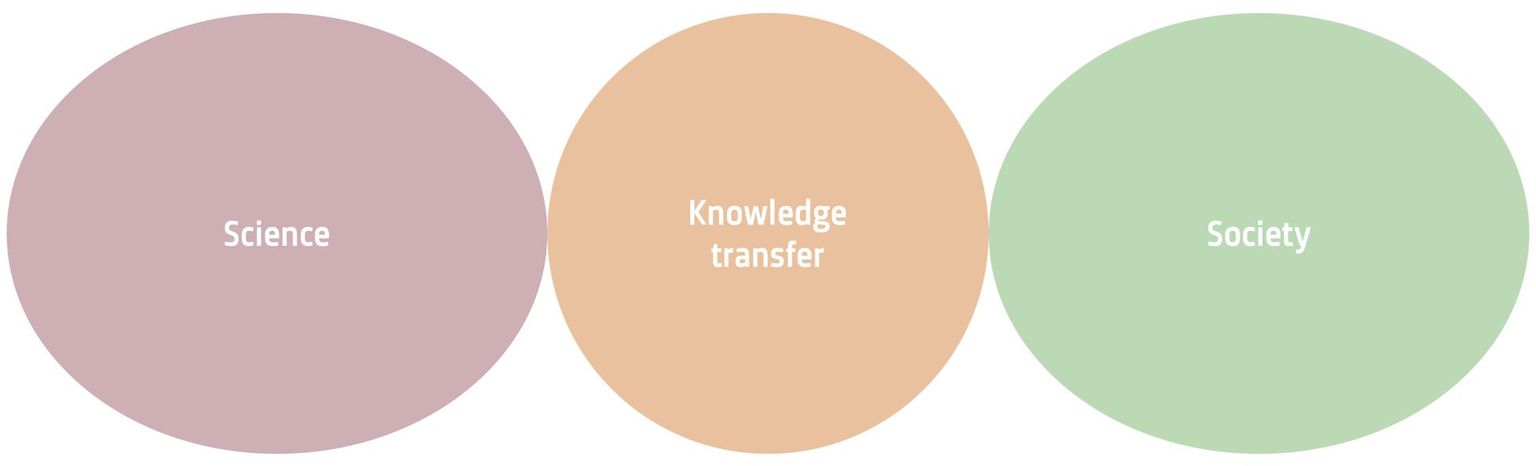
Production of knowledge for society
In this case, researchers provide factual knowledge in order to describe and understand processes in nature and society, or they develop options for action and design, such as social and technological innovations. During this process, researchers and societal actors do not exchange information directly. Instead, knowledge moves from research to society in the form of a transfer process. The scientific findings are communicated in a way that is suitable for the respective target group, such as political decision-makers. Persons who impart knowledge often also come from the scientific community: the scope of research projects can include both knowledge transfer and knowledge production.
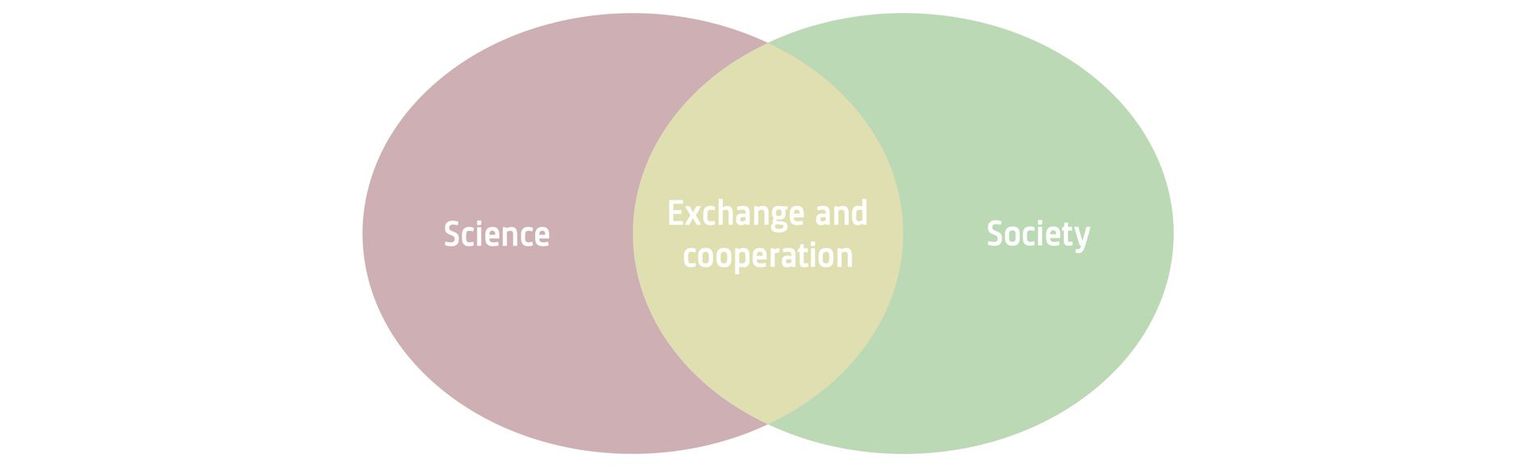
Co-production of knowledge together with other societal actors
Here, science and other fields of society work together. Non-academic experts, stakeholders and decision-makers are involved in the production of knowledge. The main focus is on jointly solving problems or shaping the future. Researchers and societal actors interact directly with one another; the latter are part of the research process. The transfer of knowledge is mutual and is part of the collaboration process. Knowledge is co-produced. In this transdisciplinary approach, the functions of researchers are more fluid than in the pure production and transfer of knowledge.
1 Pohl C, Rist S, Zimmermann A, Fry P, Gurung GS, Schneider F, Speranza CI, Kiteme B, Boillat S, Serrano E, Hirsch Hadorn G, Wiesmann U (2010) Researchers‘ roles in knowledge co-production: Experience from sustainability research in Kenya, Switzerland, Bolivia and Nepal. Science and Public Policy, 37(4): 267–281